Is It Best to Apply Manually or Automatically With a Resume? The Definitive 2025 Guide
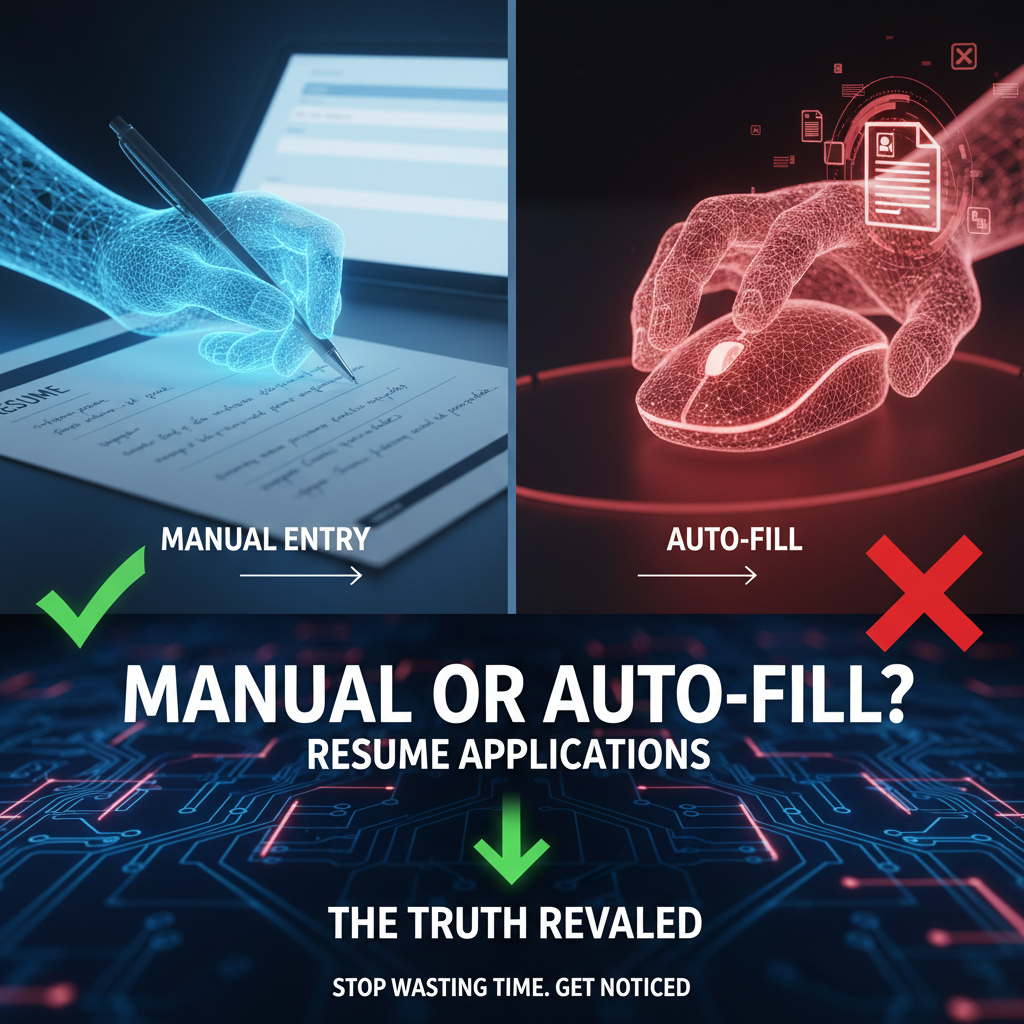
Is It Best to Apply Manually or Automatically With a Resume? The Definitive 2025 Guide
Meta Description: Confused about whether it's best to apply manually or automatically with a resume? This guide reveals the truth behind application portals, why manual entry beats auto-fill, and how to use it to your advantage. Stop wasting time and start getting noticed by recruiters today!
Introduction
You’ve spent hours perfecting your resume. You find the perfect job, click “Apply,” and upload your masterpiece, only to be faced with a soul-crushing task: manually re-entering every single detail from the resume you just uploaded. The temptation to just write "see resume" or use the system's auto-fill is immense. But is that a shortcut to the rejection pile?
If you're wondering whether it's best to apply manually or automatically with a resume, you're asking the right question. The answer is the difference between your application being seen by a human or getting lost in a digital black hole.
This guide goes beyond the simple "yes" or "no." We'll dissect why this frustrating process exists, expose the weaknesses of relying on automation, and provide a strategic, step-by-step approach to turn this tedious task into your secret weapon for landing more interviews.
Why Manual Entry is Still King in 2025
The core of the issue lies with Applicant Tracking Systems (ATS). An estimated 98% of Fortune 500 companies use an ATS to manage the high volume of applications they receive Pivotal Leap. These systems aren't perfect. When you upload a resume, the ATS "parses" or "reads" it to populate the fields in your application profile.
However, this parsing technology is notoriously unreliable.
The Fatal Flaw of Automatic Resume Parsing
- Formatting Errors: A slightly unconventional resume format, a fancy font, or even a well-placed graphic can confuse the parser. It might misinterpret your contact information, jumble your work history, or fail to recognize your key skills.
- Keyword Mismatch: The parser might not extract the exact keywords the recruiter is searching for, even if they're on your resume. This means your application becomes invisible in their search results.
- Incomplete Profiles: Auto-filling often leads to an incomplete application profile. If a field is missed, you are banking on a recruiter taking the extra step to open your resume—a step they rarely take in the initial screening phase.
Relying on automatic parsing is a gamble. Manual entry, while tedious, gives you complete control over how the ATS perceives you.
Manual vs. Automatic Application: A Head-to-Head Comparison
To make the choice crystal clear, let's break down the pros and cons.
| Feature | Manual Application Entry | Automatic/Auto-fill Application |
|---|---|---|
| Data Accuracy | Guaranteed. You ensure every field is correct and complete. | High Risk of Errors. Prone to parsing mistakes and omissions. |
| ATS Optimization | High. You can tailor each entry with relevant keywords. | Low. Relies on a flawed parser to pick up keywords. |
| Recruiter Visibility | Maximized. A complete, keyword-rich profile ranks higher. | Minimal. An incomplete or poorly parsed profile gets filtered out. |
| First Impression | Shows diligence and attention to detail. | Can appear lazy or rushed. |
| Time Investment | Higher. Requires 10-15 minutes per application. | Lower. Takes only a minute or two. |
The verdict is clear: The extra time spent on manual entry is a high-return investment in your job search.
Your Step-by-Step Guide to Acing the Manual Application
Instead of viewing it as a chore, see manual entry as an opportunity to outshine the competition. Here’s how to do it right:
- Prepare a Plain Text Version: Before you start, save a plain text (.txt) version of your resume. This makes copying and pasting into application fields clean and easy, without any hidden formatting.
- Tailor Every Entry: Do not just copy and paste blindly. Tweak your job descriptions and skills to mirror the language used in the job description. If the posting asks for "project management," use that exact phrase.
- Expand on Your Resume: Your resume is concise by necessity. The application form is your chance to elaborate. Add more detail to your accomplishments, quantify your results with more data, and list more relevant skills.
- Use All Available Fields: Don't leave optional fields blank. If there's a space for a summary, a cover letter, or additional skills, use it. This is more real estate for keywords.
- Proofread, Then Proofread Again: Typos in an application form are just as damaging as typos on a resume. Read through every field before you click "Submit."
Do's and Don'ts for Manual Application Fields
- Do: Use the exact job title from the company you're applying to.
- Don't: Write "See Resume" in any field. This is an instant red flag.
- Do: Quantify your achievements with numbers and percentages.
- Don't: Rush through the process. A single mistake can get you disqualified.
- Do: Check for consistency between your resume and the application form.
Pro Tip: Feeling overwhelmed by tailoring each application? JobSeekerTools can help you analyze the job description and identify the most important keywords to include in your application, ensuring you never miss a critical term. Our tool helps you optimize your entries in a fraction of the time.
Conclusion
In the debate of whether it's best to apply manually or automatically with a resume, the evidence is overwhelmingly in favor of manual entry. While technology has automated many parts of the job search, the final gatekeepers—the ATS and the recruiters who use them—still reward diligence and thoroughness.
By taking control of your application, you ensure your qualifications are accurately represented, you optimize your profile for recruiter searches, and you demonstrate a level of professionalism that sets you apart. Don't let a faulty parser decide your career's fate. Invest the extra time—it's the smartest move you can make.
Key Resources
Visual Guide: The ATS Black Hole
Here’s a breakdown of what happens when you apply for a job, comparing automatic resume parsing to manual data entry.
Path 1: Automatic Parsing (The Gamble)
- You upload your resume.
- The Applicant Tracking System (ATS) tries to read it.
- Result: Often creates jumbled, inaccurate data—a "black hole."
- Outcome: Your application gets "Filtered Out" before a human sees it.
Path 2: Manual Entry (The Sure Bet)
- You manually type your information into the application fields.
- The data flows cleanly and accurately into the ATS.
- Result: A complete, well-structured profile.
- Outcome: You get a "Recruiter Match" and move to the next stage.
Caption: Infographic explaining why it's best to apply manually vs automatically with a resume to beat the ATS.
Visual Guide: Manual vs. Auto-fill Comparison
This chart highlights the critical differences between manual entry and using auto-fill.
| Feature | Manual Entry | Auto-fill |
|---|---|---|
| Data Quality | Clean & Structured | Jumbled & Inaccurate |
| ATS Compatibility | ✅ High | ❌ Low |
| Gets You Seen | ✅ Yes | ❌ No |
Key Takeaway: Manual entry ensures your application is seen, while auto-fill is a risky shortcut.
Caption: Comparison chart showing the benefits of manually entering resume information versus using automatic application tools.
Frequently Asked Questions
Q1: Is it ever okay to use the auto-fill or "easy apply" features?
A: While tempting for speed, "easy apply" features on sites like LinkedIn should be used with caution. They often result in an incomplete application profile. For jobs you are genuinely interested in, always take the time to apply directly on the company's career portal and fill out the fields manually.
Q2: Will a recruiter even look at my uploaded resume if I fill everything out manually?
A: Yes. The manual fields are for the initial ATS screening. Once your application makes it through that filter, the recruiter will review your uploaded resume for a more detailed and holistic view of your experience and presentation. A well-formatted resume is still crucial.
Q3: How much more time does manual application really take?
A: On average, a thorough manual application takes about 10-15 minutes longer than a simple resume upload. While it adds up, consider the time saved by avoiding applications that go unseen. It's about quality over quantity.